Milk Production and Herd Growth
The Texas Dairy Industry’s Cold Chain Infrastructure
Milk starts warm and spoils fast. The cold chain is everything that keeps it safe between the cow and the glass, and on a Texas dairy that chain begins in a bulk tank in the heat.
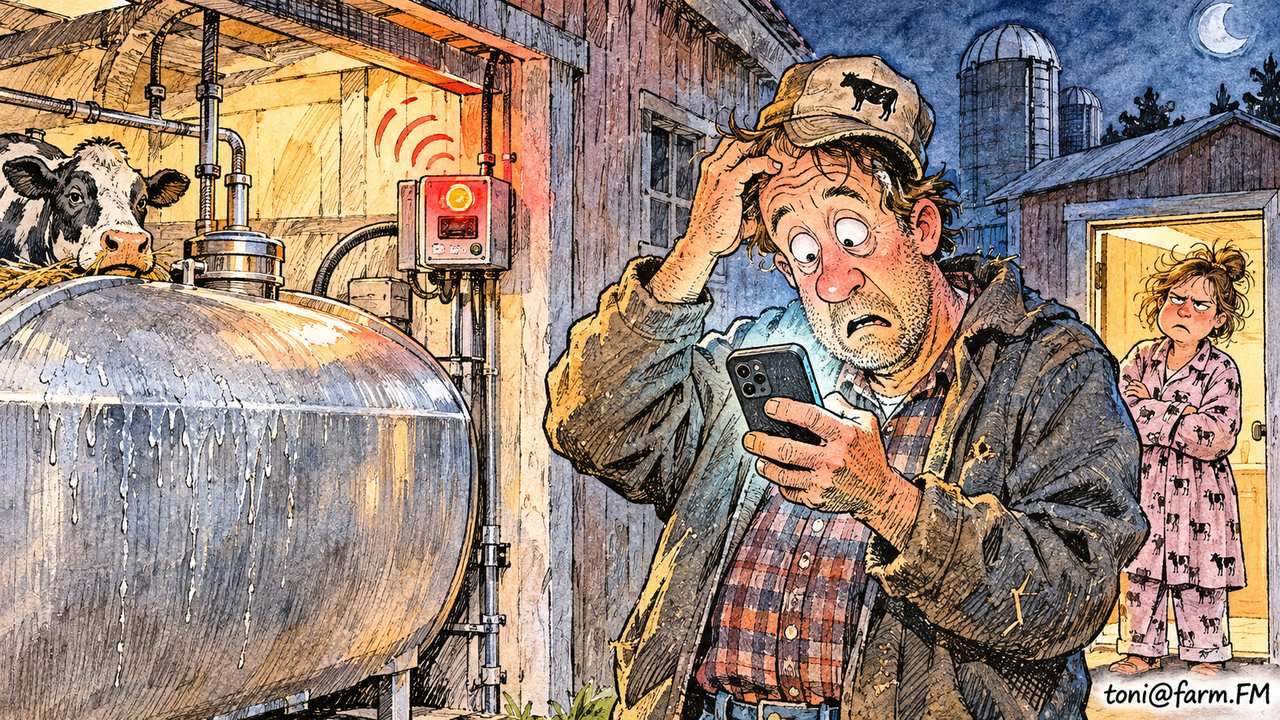
What is the cold chain?
It is the continuous series of steps that keeps milk cool: cooling at the farm, refrigerated hauling, cold storage at the plant, refrigerated delivery and the grocery cooler. A break anywhere can shorten shelf life or make milk unsafe.
Milk safety rules set limits on cooling time and temperature. The details come from federal and state regulators, so confirm the exact requirements with the FDA and the Texas Department of Agriculture instead of relying on memory. A common failure is not the tank itself but the system around it: dirty coils, a failing fan motor, a plate cooler fouled with scale, or a milkhouse so hot the compressor struggles all afternoon.
What happens on the farm?
Cooling begins right after milking. Plate coolers, bulk tanks and precoolers do the work, and they have to keep up with Texas summer water temperatures. A tank that struggles in August may need maintenance, more capacity or better precooling. Log tank temperature at each milking for a while and look at how quickly milk drops below the required level after the final load. A slow trend is an early warning, and a technician can tell you what to change.
Equipment checklist:
- Clean condenser coils and verified refrigerant levels
- Working agitator and calibrated thermometer
- Backup plan for a compressor failure
- Regular wash cycle with documented records
- A technician you can reach after hours
What if the power goes out?
A multi-day outage after an ice storm or a hurricane is the nightmare scenario. A generator sized for the bulk tank, the vacuum pump and the lights lets you keep milking and cooling. Test it under load and keep fuel on hand. A generator that has never run is only a hope. Also ask your buyer what happens if you cannot hold milk. Some plants will adjust a pickup schedule in an emergency, but only if they know early.
Ready.gov offers outage planning, and your electric provider can tell you about priority restoration programs, if any. Ask in advance, not during the storm.
How does infrastructure beyond the farm matter?
Texas has big distances, which makes refrigerated trucking and plant cold storage important. Where processors cluster, producers have more options. Where they do not, hauling distance puts more strain on the chain. Industry groups such as IDFA and Dairy MAX discuss infrastructure from the processor and marketing side.
The headline topic refers to infrastructure; any figures on investment or capacity should be checked at the named source, since these numbers change as projects open and close. A small plant or cooperative may also share cold storage, so ask about your options if your own cooler fails.
Is there help to pay for upgrades?
Possibly. USDA Rural Development runs programs aimed at rural businesses, and FSA farm loans may help with equipment. Terms and eligibility change, so call a local office and compare with a bank or Farm Credit lender. The farm money guide explains how to compare loan offers.
Ask about payback. A new cooler that cuts spoiled milk and energy use may pay for itself, but run the numbers with your own data.
What does the cold chain mean for small producers?
A farmstead creamery needs reliable refrigeration from day one, plus a plan for market day, delivery and retail display. The small farm guide covers direct sales basics, and the dairy herd guide touches on milk quality at the source.
Insurance and licensing can also depend on how you cool and store, so confirm with regulators before you build.
Where can you see more?
For market and price context, see Dairy Market News. For a lighter read on spoiled milk and warm tanks, farm.FM has a few stories, including a farm.FM piece on the bulk tank. The dairy page and news page are good starting points. Your veterinarian and a refrigeration tech see more dairies than you do, so ask what the best-run farms do differently. Their answers are free.
Sources and further reading
- FDA: food and drug safety
- Texas Department of Agriculture: state agriculture agency
- Ready.gov: FEMA disaster preparedness
- IDFA: International Dairy Foods Association
- USDA Rural Development: rural business and community programs
- FSA Farm Loans: FSA direct, guaranteed, microloan and emergency loan information
Ask locally: Ask your milk hauler and a licensed refrigeration technician to check cooling times and tank performance before summer.