Milk Production and Herd Growth
Record Milk Production Pressures Texas Dairy Prices and Margins
When the tank trucks keep rolling and every plant has plenty of milk, prices usually soften. Here is how heavy supply reaches a Texas dairy's bottom line and what producers can do about it.
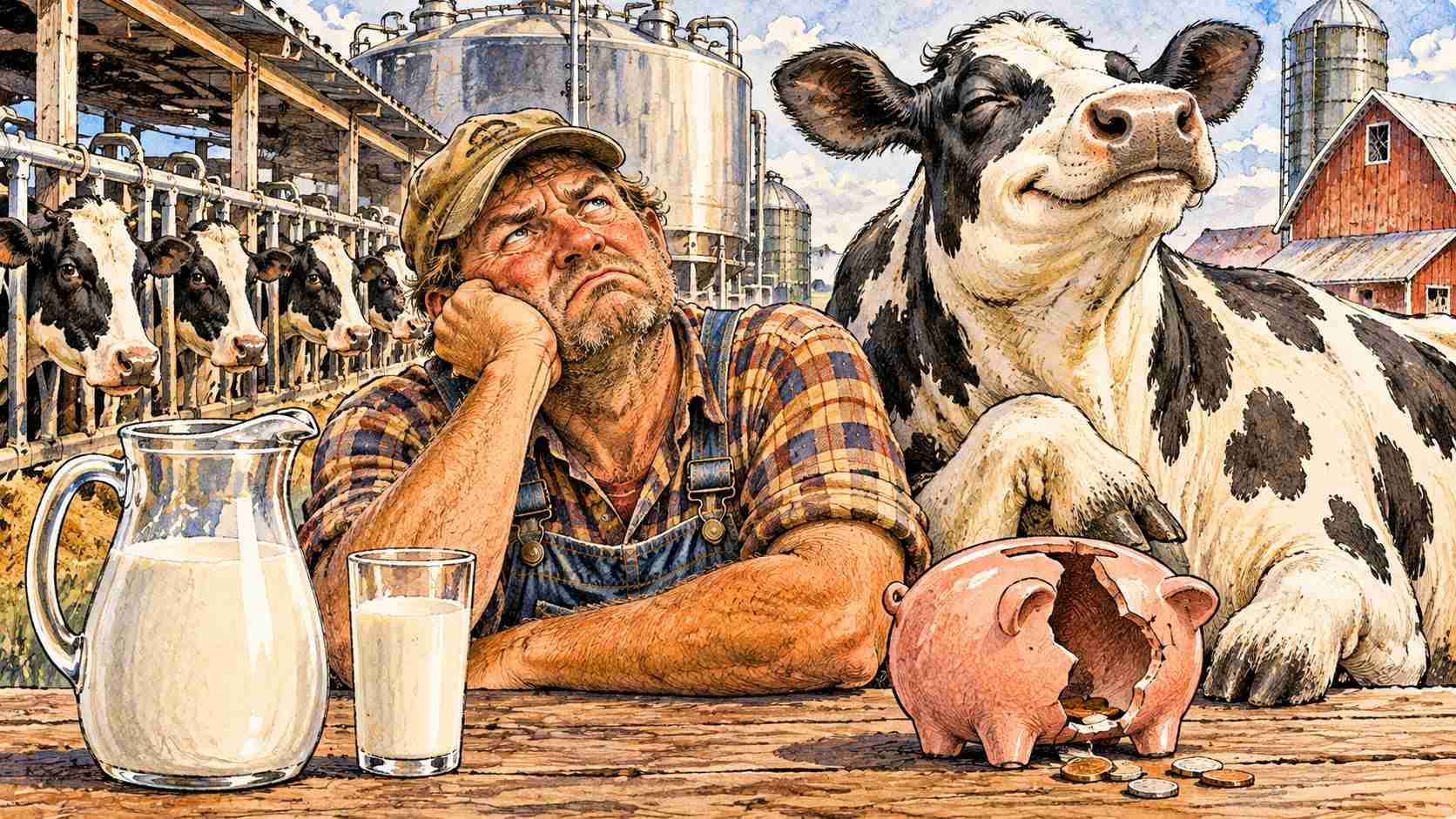
Why does more milk push prices down?
Milk is perishable, bulky and produced every day, so the market cannot easily hold it back. When production runs ahead of what plants can process and customers buy, buyers have the upper hand, and spot prices for cheese, butter and powder tend to slide. Those product prices feed the formulas that set what a farm is paid.
The headline says production is at a record. As with any headline claim, check the actual numbers at USDA NASS milk production reports instead of relying on a summary. Seasonal swings, herd counts and output per cow all move the total.
Milk production also responds to weather. Heat stress cuts output per cow in a Texas summer, which is one reason supply numbers shift from month to month. The NOAA climate pages and local forecasts help you plan cooling and feed.
How do prices turn into your milk check?
Most Texas producers ship to a cooperative or a handler, and the check reflects federal order pricing, plant location, components like butterfat and protein, hauling and any premiums or deductions. Two neighbors can see different checks for the same month because of those details.
Weekly product prices are posted in the weekly Dairy Market News, and reading them regularly shows you which way the pressure is heading before the check arrives.
- Class and component pricing drive the base value
- Hauling and stop charges come out of the check
- Premiums and quality bonuses vary by buyer
What happens to margins when the check shrinks?
Feed, labor, utilities and interest do not fall just because milk does. Margin is the gap between what you earn per hundredweight and what it costs to make that milk, so a modest price drop can swallow a large share of it when costs are stubborn.
A hypothetical example: if a herd's costs stay flat while the check slips, the first thing to disappear is the cushion for repairs and replacement heifers. Your own numbers matter more than any average, so keep a monthly cost per hundredweight figure.
Think about it as a per-cow equation. If a cow's daily milk income no longer covers her feed and the rest of her daily cost, she is a drag on the herd. That is why culling decisions get serious in a low-price stretch.
What tools protect against low prices?
The federal safety net is worth a close look. The Dairy Margin Coverage program is built around the margin between a national milk price and a national feed cost, and enrollment choices change with each sign-up period. Read the current terms and deadlines on the official page before deciding.
Beyond that, some producers talk to their cooperative or a licensed broker about forward pricing and risk tools. Texas A&M AgriLife Extension publishes dairy economics material that helps you compare options without a sales pitch.
How should you adjust the operation in a heavy-supply year?
Start with the controllable side. Review the ration with your nutritionist, cull the cows that cost more than they return, and look hard at repair and energy spending. Small savings per cow add up across a milking string.
Next, check your credit position. Talk to your lender early, before covenants become a problem, and see the cash-flow basics in this farm money guide. Herd-level habits that protect output and health are covered in a dairy herd care resource.
Do not skip the human side. A long run of thin margins wears on families, and it is fine to ask for help early. The USDA Economic Research Service also publishes cost of production data that can serve as a rough benchmark.
What does it mean for the Texas dairy region?
Texas milk is produced from the Panhandle and High Plains to Central Texas and the Stephenville area, and plants in the state compete for supply. Heavy production can strain processing and hauling at the same time, which is why plant capacity news keeps showing up in the trade press.
For a lighter read on the same swings, farm.FM runs dairy stories and satire, and the broader economics are covered in the farm.FM agribusiness section. One recent write-up, a farm.FM piece on milk prices, shows how producers talk about it at the coffee shop.
How can you read the market without being a trader?
You do not need a screen full of charts. A simple routine works: check the weekly Dairy Market News on the same day, note the direction of cheese and butter, and compare it with your last two milk checks. Over a few weeks you will see the connection.
Add one more habit: write down your cost of production each month and keep a rolling average. When the price report and your cost line cross, you will know sooner than your accountant does. Keep notes on what your buyer says about demand, because their view is information too.
Sources and further reading
- USDA NASS: agricultural statistics and surveys
- USDA Dairy Market News: weekly dairy price reports
- Dairy Margin Coverage: FSA Dairy Margin Coverage program
- Texas A&M AgriLife Extension: Texas extension service
- Dallas Fed: regional economy including Texas and Oklahoma
Ask locally: Ask your cooperative field rep, your nutritionist and your AgriLife Extension county agent for dairy economics help.